
Imagine two public restrooms. Two public restrooms. The other serves a remote trailhead, surrounded by open space.
Both provide the exact service, but constructing them as identical buildings could overlook the differences in how these locations perform.
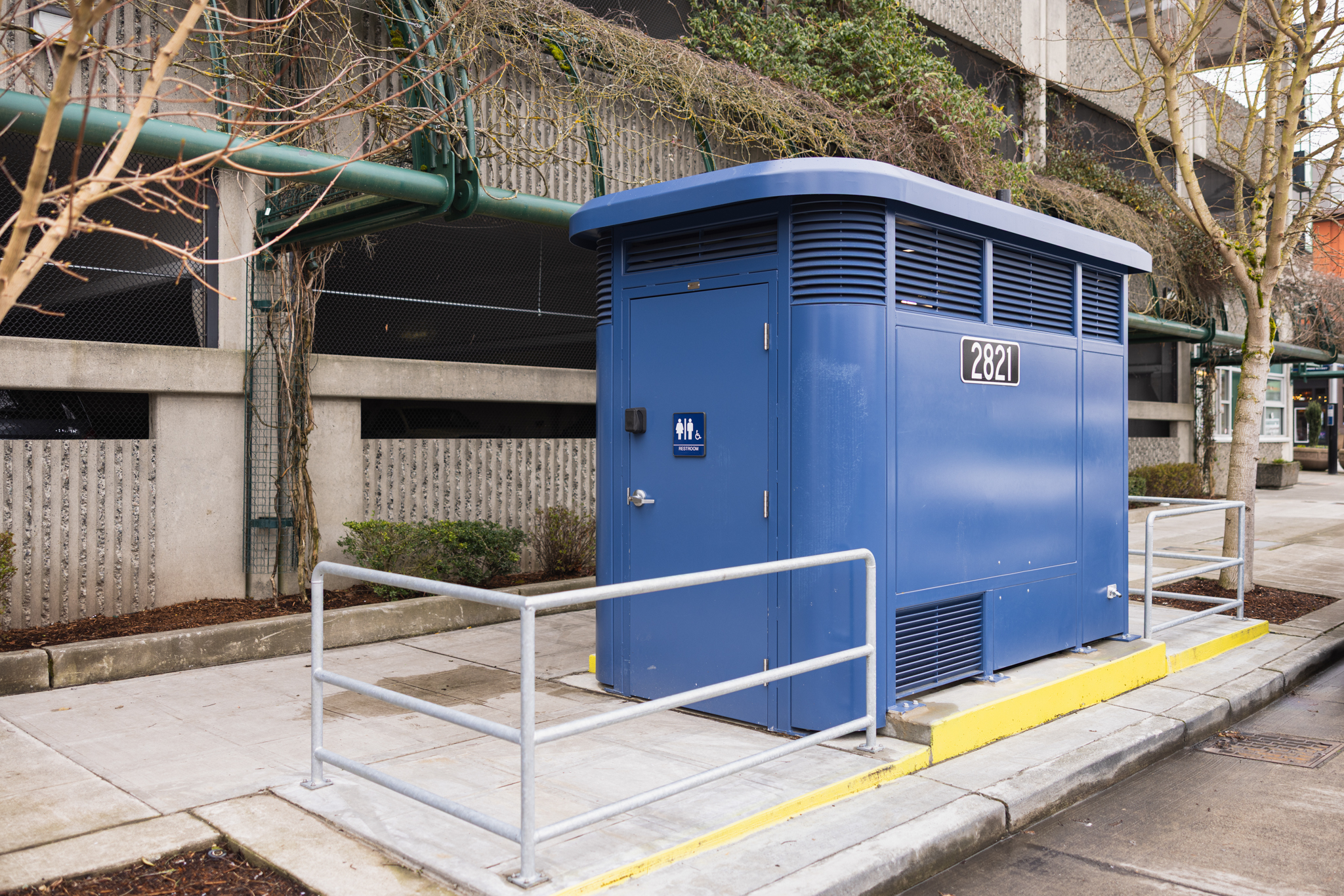
Image credit: romtec.com
The selection of the location is vital to creating good public restrooms. Who will be using the facilities? What is the maximum number of people who can visit at the same time? What are the available utilities? How far will visitors have to be able to walk? What architectural style surrounds the structure?
These questions can influence nearly every decision that follows.
It is possible to start with observing how people use the site.
Toilets’ placement shouldn’t be viewed separately from the rest and design of parks. The public may show up in large numbers to an athletic facility to view games or events. A restroom serving playgrounds needs to be easily accessible for families, while also fitting into pedestrian circulation. In a downtown environment there may be a need to fit sidewalk restrooms into a smaller footprint while complementing adjacent streetscape elements.
The structure itself isn’t the entire experience. Access points, routes, activities and accessibility all impact how the location of the building works in practice.
Remote Sites Create a Different Problem
The project should be moved away from the developed street and utility infrastructure. It could be difficult to connect a scenic view or trailhead, campground, or even an existing sewer system. In appropriate applications, vault toilets provide an alternative that allows restroom facilities to serve locations where traditional plumbing infrastructure may be difficult or impractical.
The design process is distinct. Instead of picking a structure the project team should look at the existing conditions on the site to determine what restroom system will work best in the particular location.
Capacity should reflect the actual usage
A park in a quiet neighborhood and a sports complex regionally don’t have the same types of patrons. Demand at peak times is important. The peak demand is important.
Owners are able to plan their project around the usage of the bathroom, taking into consideration the capacity, layout, and fixtures, and access for maintenance.
The flexibility of prefabricated park restrooms could be very beneficial to businesses that are interested in the building. Instead of requiring the space to follow a particular design, the facility can be customized around the needs of the project.
Even though Architecture is a part of the conversation
The look of a restroom is vital, but it isn’t to be neglected because the purpose is far more important. The bathroom is a crucial element of the landscape for everyone to enjoy. Roof shapes, siding colors, masonry, fixtures as well as other architectural features could help relate it to nearby concession or pavilion buildings or the natural surroundings an established design theme or even a neighborhood.
Romtec’s customized approach permits teams to use different colors, materials and shapes, as well as exterior styling, instead of being limited to the standard appearance.
Designing for the Space, not only the Theming
Romtec collaborates with park owners and contractors to supply and install restrooms and other public buildings. Its expertise covers the documentation of buildings, code-related considerations, ADA issues, engineering, selection of components, as well as construction within the United States.
The key starting point but it’s surprisingly simple. Don’t begin by asking what restroom building you can build on the spot. Learn about what’s already taking place on the location such as people, activities and infrastructure. Design the structure which is a part of it.